How Do You Choose the Right Thermoplastic for a Thermoformed Part?
The wrong sheet material rarely announces itself early. It shows up after tooling is cut, when a guard cracks in a cold warehouse, a housing yellows under UV, or a panel fails a flammability test on the line. By then the redesign costs real schedule and real money. Picking the right thermoplastic at the front of a project is the difference between a part that ships and a part that comes back.
This guide covers the heavy-gauge thermoplastics used most often in thermoforming, what each one does well, and where it earns its place in a design. It is written for the engineer, designer, or buyer who has already decided thermoforming is the right process and now has to choose the resin.
What factors determine the right thermoforming material?
Start with how the part is most likely to fail, not with a favorite resin. A bezel that lives indoors has nothing in common with a guard mounted outdoors on agricultural equipment, and the material decision should reflect that. Five questions sort most projects:
- How much impact and abuse will the part take? A machine guard struck by tools needs a tough resin like ABS or KYDEX. A static display does not.
- What temperature and chemicals will it see? Outdoor parts need UV and weather resistance. Parts near solvents or cleaning agents need chemical resistance built into the resin choice.
- Does it carry a flammability requirement? Transit, electrical, and many industrial parts must meet a UL 94 rating, which immediately points toward fire-rated grades.
- How visible is the part, and what finish does it need? A cosmetic enclosure that takes paint or texture is a different specification than a hidden internal bracket.
Cost ties all of these together. The commodity resins cost less per pound but may not meet the performance bar, while engineered grades cost more and buy you properties you may not need. The job is matching the resin to the requirement, not over-specifying it.
Is ABS the right choice for housings, guards, and enclosures?
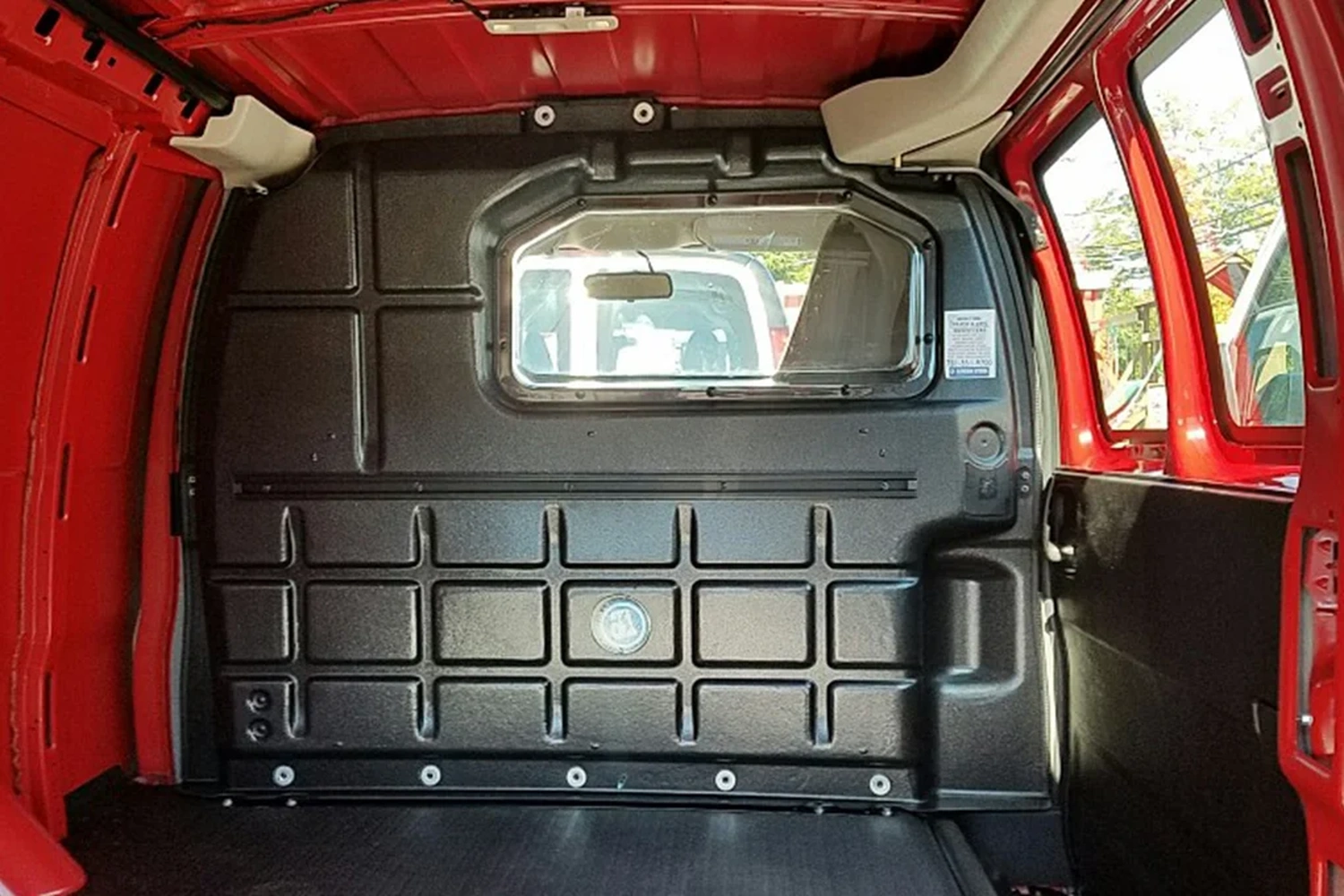
For most equipment housings, machine guards, and covers, ABS is the logical starting point. It pairs strong impact resistance with good machinability at a cost that works for both prototypes and production. ABS comes in general-purpose and fire-rated grades, and in a wide range of sheet thicknesses, which gives designers room to tune stiffness without changing materials.
That versatility is why ABS shows up across retail store fixtures, point-of-purchase displays, models and prototypes, storage cases, and the structural housings that surround industrial equipment. When a metal guard becomes a plastic one, ABS is frequently the resin that replaces the steel. PCI's belt guard conversion, which took a 718-pound steel guard down to a 38-pound ABS part for a 95% weight reduction, is a clear example of where the material fits.
When should you specify acrylic instead of glass?
Specify acrylic when you need optical clarity but cannot accept the weight or fragility of glass. Widely known by the trade name Plexiglass®, acrylic is a clear, stiff, glass-like plastic with strong light transmission at roughly half the weight of glass and substantially greater impact resistance, according to material manufacturer spec sheets. The world got a fast lesson in acrylic during the pandemic, when it became the material behind millions of safety shields and barriers in stores and restaurants. It also carries signage, architectural glazing, and LED lighting panels.
Acrylic sheet comes in two forms, and the difference matters for forming. Extruded acrylic can be produced in custom sheet lengths, widths, and thicknesses, which cuts waste and yield loss from trimming, and it bonds well with solvent-based adhesives. Cast acrylic runs through a continuous cast process that delivers more uniform thickness and larger sheet sizes, with better chemical resistance and machinability than extruded sheet. The tradeoff is formability: cast sheet is harder to thermoform than extruded, so deep-draw parts usually point toward the extruded grade.
Where does cellulose acetate butyrate (CAB) fit?
CAB earns its place on thin-gauge parts that need clarity and outdoor durability. It is a clear, easy-to-thermoform polymer with strong drape and blister-forming characteristics, and its UV resistance makes it a sound choice for parts that live outside. Typical sheet runs 50 in. by 76 in. at thicknesses of 0.030 in. to 0.250 in., which lands it squarely in thin-gauge applications such as packaging rather than the heavy structural work where ABS and KYDEX dominate.
What about flexible EVA for orthotics and prosthetics?
When a part needs to flex and absorb load rather than hold a rigid shape, flexible ethylene vinyl acetate (EVA) is the answer. This soft copolymer, sold under names such as OP-TEK® and Duraflex®, combines high elasticity with low-temperature toughness and good stress-crack and UV resistance. Those properties make it a regular choice for the orthotic and prosthetic markets. It is available in white, black, and natural shades, with optional additives to reduce friction where the part contacts skin or hardware.
Is expanded PVC a good substrate for signage and displays?
Expanded PVC is the workhorse for merchandising, signage, and display work where you want a light, formable, easily fabricated material. It is tough and versatile, and it takes digital and screen printing, paint, lamination, and vinyl lettering well, which is why it carries POP displays, display boards, exhibits, and kiosks. It also serves increasingly as a wood replacement and comes in a broad range of colors and textures. Commercial lines include Vycom's Celtec® and 3A Composites' Sintra® expanded PVC foam board.
When does high-impact polystyrene (HIPS) make sense?
HIPS is the budget-conscious pick when a part needs to be tough, easy to form, and easy to fabricate without commanding an engineered-resin price. It forms cleanly into countertop point-of-purchase displays, thermoformed machine housings and parts, shelves, and fixtures. Standard sheet dimensions range from 40 in. by 72 in. to 48 in. by 96 in., in thicknesses from 0.020 in. to 0.250 in. HIPS components assemble with mechanical fasteners or adhesives, and the material accepts a range of printing methods, which makes it a practical substrate for decorated parts.
Why do demanding environments call for KYDEX?
When a part has to survive abuse and meet a flammability standard at the same time, KYDEX is the resin that does both. KYDEX is a line of acrylic-polyvinyl chloride sheet manufactured by Sekisui SPI, engineered for high impact strength and durability while remaining easy to thermoform. It can be ordered in custom-cut sizes and shows up in thermoformed equipment housings as well as aircraft, bus, and train interiors, where fire ratings are not optional. The grades differ by performance profile, so the specification depends on the demands of the part.
KYDEX 100
A rigid, durable plastic alloy sheet that meets UL 94 V-0 and 5V, with a notched Izod impact resistance of 961 J/m (18 ft-lbs/in) per Sekisui SPI's KYDEX technical data. It is the grade to reach for when impact and flammability both matter.
KYDEX T
A fire-rated grade that forms with highly uniform wall thickness, meaning less thinning across the part, and resists a broad range of corrosive chemicals. It suits parts that need consistent cosmetic surfaces and chemical durability.
KYDEX V
An economical, recycled-content grade well suited to parts without finishing requirements, where cost matters more than surface appearance.
Can thermoformed plastic really replace metal here?
This is the question that stops most metal-to-plastic conversions before they start, so it is worth answering directly. The honest answer is that it depends on the load case, but the cases where plastic wins are broader than most engineers assume. PCI's belt guard conversion replaced a 718-pound steel guard with a 38-pound ABS part, a 95% weight reduction, and delivered it three weeks ahead of a trade show deadline. The plastic version was safer to handle, cheaper to run, and did not corrode.
The economics reinforce the case. Thermoforming tooling typically runs about 10% to 15% of the cost of an equivalent injection mold, per PCI's tooling cost data, and prototype lead times of 15 to 20 working days let you validate a design before committing to production tooling. For large structural parts in moderate volumes, that combination of low tooling cost, fast iteration, and dramatic weight savings is hard for metal fabrication to match. The right material choice is what makes the conversion hold up in the field.
Click here for Part 2 of Thermoforming Materials Overview.
Frequently Asked Questions
What is the most common material used in heavy-gauge thermoforming?
ABS is the most common starting point for heavy-gauge structural parts such as machine housings, guards, and covers, because it balances impact resistance, machinability, and cost. KYDEX takes over when a part also has to meet a flammability rating, and HMWPE or polypropylene handle parts that need chemical or abrasion resistance.
Which thermoforming material is best for outdoor parts?
For outdoor parts, choose a resin with built-in UV and weather resistance. CAB and EVA both offer good UV resistance for their respective gauges, and many ABS and KYDEX grades are formulated for outdoor service. The deciding factors are how much impact the part will take and whether it needs a fire rating in addition to weatherability.
Do thermoforming materials meet flammability standards?
Yes. Fire-rated grades are available across several resins, and KYDEX 100 meets UL 94 V-0 and 5V per Sekisui SPI's technical data. Transit, electrical, and many industrial applications require a documented flammability rating, so confirm the specific standard the part must meet before selecting a grade.
Can thermoformed plastic replace a steel part?
In many structural applications, yes. PCI's belt guard conversion took a 718-pound steel guard to a 38-pound ABS part, a 95% weight reduction, while improving safety and cutting operating cost. Whether plastic is right for a given part depends on the load case, so the material and gauge should be validated against the application's structural requirements.
How thick can thermoformed sheet be?
Heavy-gauge thermoforming generally runs sheet in the 0.060 in. to 0.500 in. range. The exact thickness depends on the part's stiffness and strength requirements and the resin selected, which is why gauge is one of the variables to settle early in a design.